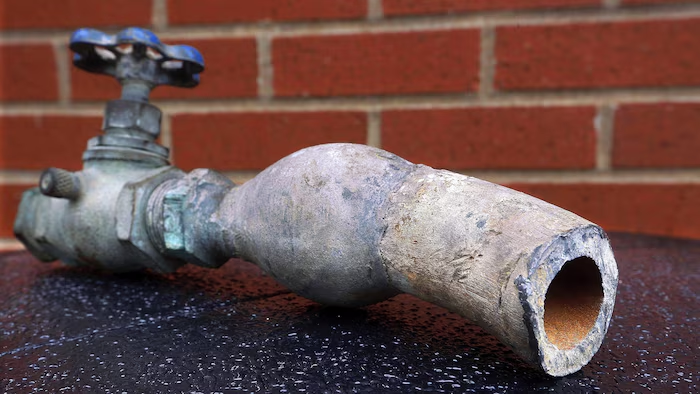






A journey that can affect water quality
Many Quebecers believe that once their home is connected to the municipal system, it receives perfectly pure, risk-free water. However, even city water, although it meets public health standards, is not always free of impurities. Before reaching your faucets, it travels through long pipes and goes through various treatment and distribution stages that can affect its quality. This journey can introduce residues such as chlorine, dissolved metals or particles from old pipes. Filtering your water at home is therefore not a luxury, but a simple way to ensure consistent quality, protect your health and improve your everyday comfort.
The limits of chemical disinfection
Municipal water is treated to remove pathogenic microorganisms and major contaminants, but treatment often relies on chemical disinfectants such as chlorine or chloramine. While these agents are effective against bacteria, they sometimes leave an unpleasant taste or smell and can irritate some sensitive people. In addition, when they react with organic matter naturally present in water, they form disinfection by-products, such as trihalomethanes, whose long-term consumption is not advised. Home filtration, with an activated carbon system or a multi-stage filter, removes these residues while preserving essential minerals, providing purer, more pleasant drinking water.
Aging infrastructure and heavy metals
Even though it is monitored daily by municipal authorities, city water quality can vary depending on local infrastructure. Water pipes, some of them several decades old, can release particles of copper, iron or even lead in older homes. These heavy metals, even in very low concentrations, can build up in the body over the long term and pose a health risk, particularly for children. Installing a suitable filter at the point of entry or the point of use (such as a faucet or an under-sink system) acts as an additional barrier against these invisible contaminants. It ensures that the water you drink every day is free of unwanted residues and stays fresh.
Better taste and practical benefits
Filtering city water is also a question of taste and comfort. Many people notice the difference from the very first glass: filtered water is clearer, softer and more pleasant, whether for drinking, cooking or making coffee. Without the taste of chlorine, food regains its natural flavours, and appliances such as kettles and coffee makers stay free of scale deposits. This improvement in taste comes with a practical benefit: by optimizing water quality, you reduce appliance fouling and extend their lifespan, which means savings over the long term.
An eco-friendly, responsible lifestyle choice
Environmentally, home filtration also reduces dependence on bottled water. In Quebec, thousands of plastic bottles end up in landfills or waterways every day, despite recycling. By choosing a residential filtration system, you help reduce plastic waste while saving on the cost of bought water. It is both an eco-friendly and an economical step, fitting perfectly into a sustainable approach. In addition, quality certified filters meet rigorous standards and require little maintenance, making this solution practical and accessible to every household.
The peace of mind of a safe installation
Ultimately, even city water needs additional filtration if you want to reach an optimal level of quality. Clear water, with no chlorine taste or metallic traces, provides not only a better drinking experience but also peace of mind. Bricareau offers high-performing systems adapted to local water quality and to each household’s needs. Having a filter installed means investing in your family’s health, the durability of your home and respect for the environment. Because filtered water is more than a comfort: it is the certainty of drinking water as pure as it naturally should be.