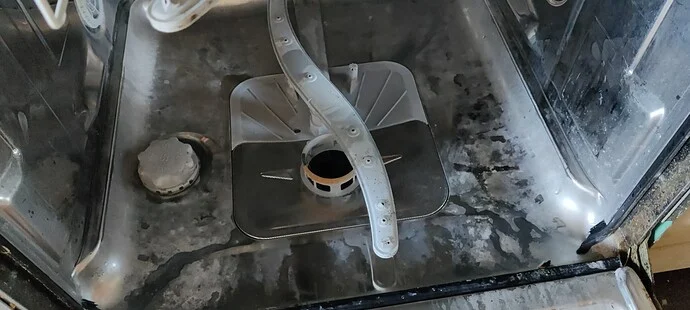





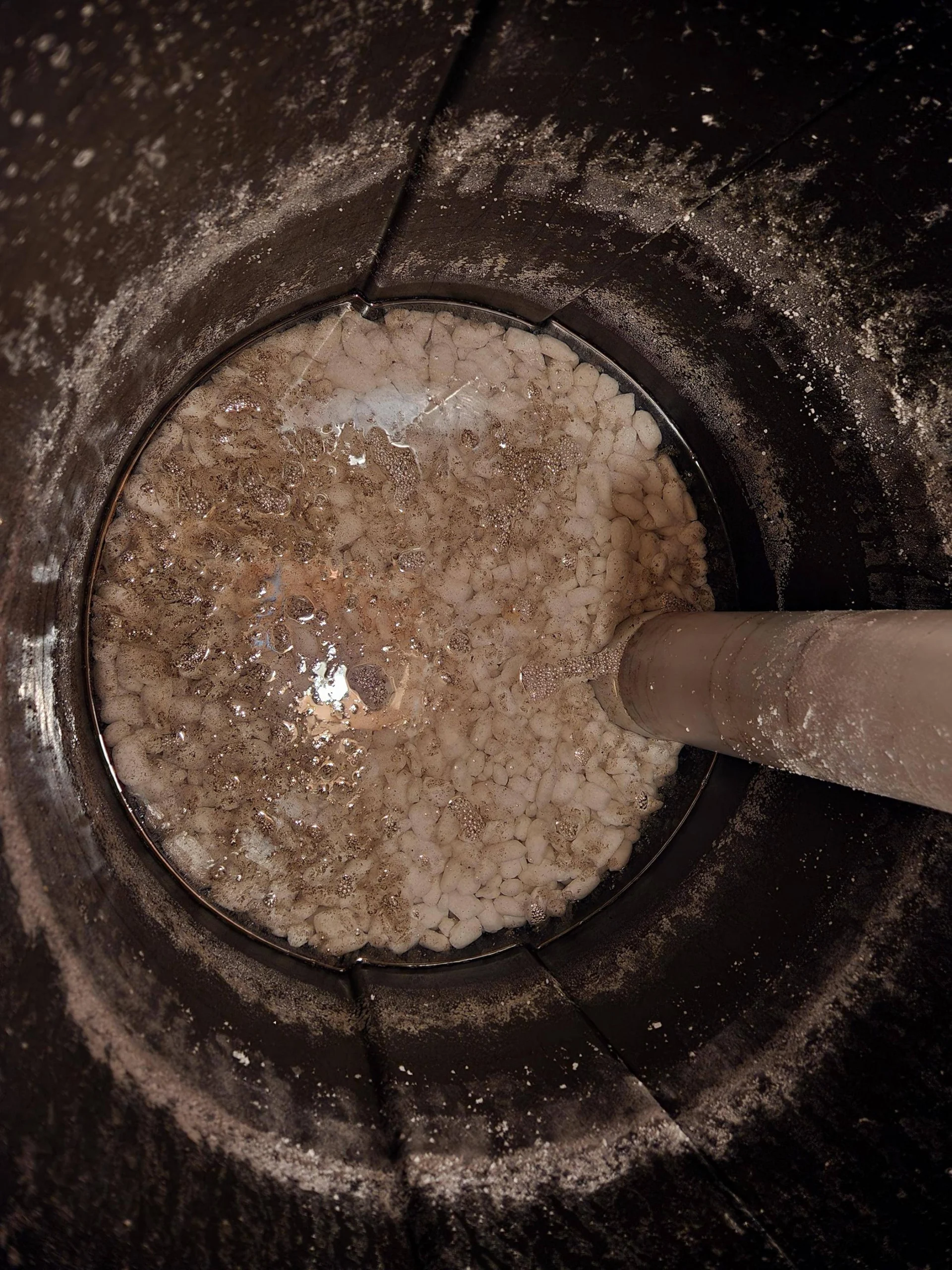
A common but worrying sight
Finding dirty or cloudy water in your softener’s brine tank is as common as it is worrying for many Quebec homeowners. This tank plays a key role in regenerating the resin: it is where the brine forms, a salty solution used to flush out accumulated limescale and minerals. In principle, this water should stay clear and clean. When it turns brownish or gritty, or gives off an odour, it points to an imbalance or a lack of maintenance in the system. Fortunately, these problems usually have an identifiable cause and can be fixed quickly before they affect the softener’s performance.
Salt quality: a decisive factor
Dirty water in the brine tank often comes from contamination of the salt itself. Not all softener salts are equal: low-quality products sometimes contain impurities such as dust, mud or residual minerals that settle at the bottom of the tank. When exposed to moisture, these impurities form a slimy, discoloured mass that makes the brine cloudy. This deposit, known as “mushing” or “mudding”, prevents the salt from dissolving properly and disrupts resin regeneration. That is why it is important to choose high-purity salt, made of refined sodium chloride pellets, which prevents sediment buildup and crusting in the tank over the long term.
The importance of regular maintenance
Another frequent factor is a lack of regular maintenance. Over time, salt residue and minerals naturally build up at the bottom of the tank. If the tank is never emptied or cleaned, these deposits break down and discolour the brine. In damp basements, dust or debris can also get into the tank, making the problem worse. It is therefore recommended to empty and thoroughly clean the brine tank once or twice a year: rinse the walls, remove solid deposits and make sure the floats and injectors are not clogged. A water treatment technician will also run a complete test to check the brine’s composition and adjust the settings if needed.
Impure water getting in
In some cases, impure water getting into the system may also be to blame. Because the softener is connected to the household plumbing, impurities from the raw water (especially sediment from a well) or a backflow of iron-laden water can cloud the brine. This often shows up as an orange or brownish colour, typical of iron oxides. If the problem persists, a pre-filter may be needed ahead of the softener to remove these particles before they reach the resin and the tank. In rural areas, it is also recommended to have a complete water quality test done before installation, so the system can be adapted to the chemistry of the well or municipal supply.
Salt bridges: how they form and how to fix them
Another rarely mentioned but common factor is the salt bridge, a hard crust that forms above the brine level and prevents the salt from dissolving properly. Under this compact layer, stagnant water can pick up impurities and turn cloudy, even encouraging organic deposits. The problem is easy to detect: if you tap on the sides of the tank, you hear a hollow sound under the surface. Simply break up the crust gently with a plastic stick, then stir the salt gently to restart dissolution. If the bridge is too large, a complete cleaning is preferable.
Prevention is the key to soft water
In short, dirty water in the brine tank always signals an imbalance to correct, but rarely a serious problem. The key lies in regular maintenance, quality salt and minimal monitoring of your unit. For water treatment specialists, cleaning the tank, checking the brine and a technical inspection are an integral part of the recommended annual maintenance. A well-maintained softener ensures consistent performance, quality soft water and a longer system life. By taking care of your brine tank, you optimize your unit’s efficiency and extend its lifespan, while guaranteeing clear, pure and pleasant water every time you use it.