



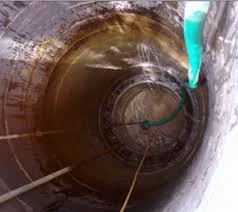
Causes of bacterial contamination
Bacteria in a well are a common problem in Quebec, often caused by surface water seeping in, cracks in the casing or a poorly sealed wellhead. When a test reveals total coliforms or E. coli, you need to act quickly to avoid any health risk. Shock chlorination is then the recommended solution: it involves injecting a chlorine solution into the well and the distribution system to kill all the bacteria present and restore safe drinking water.
The importance of a preliminary inspection
Before doing anything, it is essential to identify the source of the contamination. A professional will check the condition of the well cap, the seals, the surrounding drainage and any nearby septic installations. This preliminary inspection ensures that disinfection will not be just a temporary fix but a lasting solution, because treating without correcting the cause would mean starting over a few weeks later. Once the possible sources have been eliminated, disinfection can be carried out effectively.
Preparing and injecting the chlorine
Preparing the well is a crucial step. The pumping system must be shut off, the wellhead cleaned and the volume of water to be treated calculated to determine the right amount of chlorine. A solution that is too weak would be ineffective, while an excessive concentration could damage system components. Once the mixture is ready, the technician introduces the solution into the well and then circulates it through the entire household system, including faucets, the water heater and the pipes, so that the disinfectant reaches every contaminated area.
Contact time and flushing the system
The product must then work for several hours, often between 12 and 24, during which the water must not be drunk or used. After this contact period, the well is thoroughly flushed until the chlorine smell has completely disappeared. This flushing phase is essential to avoid any residual taste and to protect the plumbing. The chlorinated water discharged must be dispersed in a suitable area, away from plants and septic systems, to avoid harming the environment.
Follow-up testing and permanent solutions
Once flushing is complete, follow-up tests must be carried out a few days apart to confirm that the treatment worked. If the tests still show bacteria, other measures may be needed: a thorough inspection, cleaning of the casing or installation of a permanent treatment system such as a UV filter. These systems provide continuous protection against microorganisms and keep everyday drinking water safe.
Prevention and long-term maintenance
Finally, prevention is always better than cure. Regular well maintenance, keeping the surrounding area clear of contaminants and an annual water test are guarantees of longevity and peace of mind. Shock chlorination is not just an emergency solution: it is a reminder of the importance of careful follow-up and constant attention to water quality. By entrusting this task to water treatment experts, you give your family a pure, safe and lasting resource.