





A balance between dental prevention and caution
Fluoride is a natural element found in soil and rock, and therefore in some groundwater sources in Quebec. For decades, it has also been added to several municipal systems to prevent tooth decay, a practice supported by public health authorities. However, the presence of fluoride in water also raises legitimate questions for many private well owners and consumers who care about the purity of their drinking water. Should you try to filter it? The answer depends on the concentration, the source of the water and each household’s sensitivities, as well as on a balance between its benefits and its potential risks.
Benefits and tolerance thresholds
In controlled amounts, fluoride is good for oral health. A level of about 0.7 mg/L in water helps strengthen enamel and prevent cavities, especially in children. That is why several Quebec municipalities fluoridated their public systems for a long time. Beyond a certain threshold, however, this element can become undesirable. Prolonged exposure to excessive concentrations can cause dental fluorosis, a discolouration of the enamel, and in extreme cases, bone damage. The World Health Organization sets the safe limit at 1.5 mg/L, but some regions rich in mineral deposits sometimes naturally exceed this value, particularly in private wells.
Test before you decide
For private well owners, the only way to know whether fluoride is present in excess is to have their water tested. A complete chemical analysis will determine its actual concentration and confirm that it remains within recommended limits. Unlike other contaminants, fluoride has no taste or smell, which makes it impossible to detect without a test. If the result shows a concentration above the standards, installing a filtration system becomes advisable. It is also a sensible precaution for households with young children, or for people who prefer to limit their exposure to added fluoride, especially if they already use fluoridated products such as toothpaste or certain supplements.
Effective filtration technologies
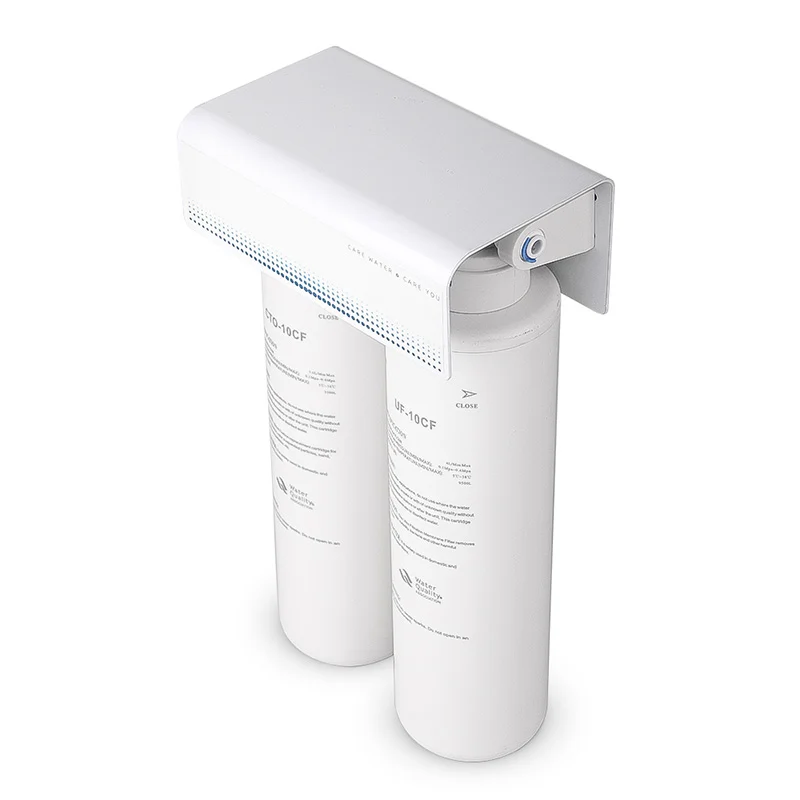
The filtration systems that can effectively remove fluoride are mainly reverse osmosis, activated alumina and anion exchange. Reverse osmosis remains the most popular solution among homeowners: it removes 90% to 95% of fluoride along with other contaminants such as nitrates, lead and chlorine residues. Installed under the sink or integrated into the main supply, this system provides excellent-quality drinking water. However, it must be maintained regularly — filter changes, periodic disinfection and pressure checks — to remain fully effective. Activated alumina filters are also effective, but require constant monitoring of pH and regeneration cycles.
A personalized, balanced approach
From an environmental and health standpoint, partially filtering fluoride does not mean removing it completely: the goal is rather to maintain a balanced concentration. The idea is not to eliminate an element that has a protective effect in small amounts, but to reduce excessive exposure that could harm health or the taste of the water. Every household has different needs: a healthy adult does not have the same tolerance as a young child or someone with kidney problems. That is why a personalized assessment by a water treatment professional is strongly recommended before any installation.
Long-term well-being and peace of mind
As Quebecers pay more and more attention to the quality and composition of their water, choosing the right filtration solutions is not just a question of taste but of long-term well-being. By having your water tested and choosing the right system, you give your family clear, healthy and balanced water, with neither an excess nor a lack of essential minerals. Well managed, fluoride is not a threat, but an excess deserves attention. Water treatment experts can guide you toward a custom solution that respects your health and the environment, so that every sip brings confidence and peace of mind.